
Chair exercises for seniors
Ten safe, seated moves to build strength, mobility and balance at home, with step-by-step instructions, an easier and a harder option for each, and a simple 15-minute routine.
Why chair exercises work
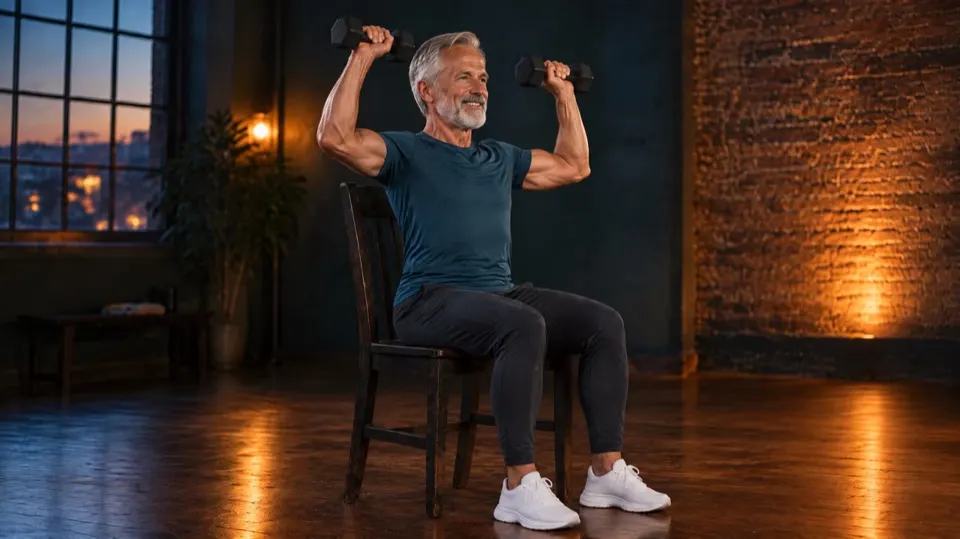
Strength, balance and mobility are what keep everyday life easy: getting up from a sofa, carrying shopping, climbing stairs and staying steady on your feet. A chair gives you support, so you can train those things with less load on your joints and less worry about falling. Chair workouts suit people who are new to exercise, coming back after a break, managing stiff knees or hips, or simply prefer to sit.
Safety first
- Use a sturdy chair without wheels, pushed against a wall so it cannot slide.
- Sit near the front of the seat with your feet flat and knees about level with your hips.
- Wear comfortable clothes and supportive shoes, and keep water nearby.
- Breathe normally. Do not hold your breath while you push.
- Move slowly and only as far as is comfortable. Effort is fine; sharp or joint pain is not.
- Stop if you feel dizzy, short of breath, or have chest discomfort, and seek medical help if it continues.
- Check with your doctor first if you have a heart or blood pressure condition, osteoporosis, recent surgery or a recent fall.
The 10 best chair exercises for seniors
- 1
Seated marching
Warm-up · hips & heart- Sit tall near the front of the chair, feet flat.
- Lift one knee a few inches, lower it, then the other, like marching.
- Swing your arms gently as you go.
- How much
- 30–60 seconds
- Easier
- Lift your heels only, keeping toes on the floor.
- Harder
- Lift your knees higher and march faster.
- 2
Sit to stand
Legs & glutes- Sit near the front of the chair, feet hip-width apart and slightly behind your knees.
- Lean forward a little and press through your whole foot to stand up tall.
- Reach your hips back and sit down slowly with control.
- How much
- 2 sets of 6–10
- Easier
- Push off the armrests or your thighs with your hands.
- Harder
- Cross your arms over your chest, or lower more slowly (3 seconds down).
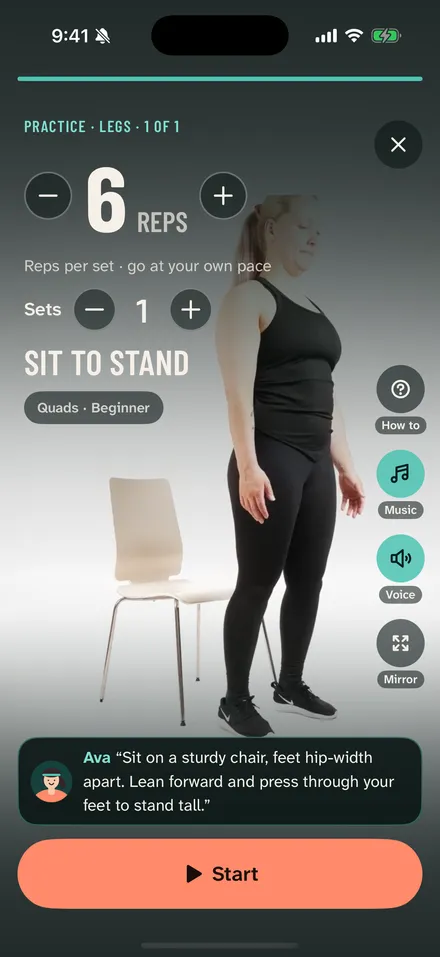
Sit to stand in the Train at Home app, with a coach video and form cues. - 3
Seated leg extension
Front of thighs & knees- Sit tall and hold the sides of the seat.
- Straighten one knee until your leg is level with your hip, toes pointing up.
- Hold for a second, then lower slowly. Switch legs.
- How much
- 2 sets of 8–10 each leg
- Easier
- Straighten the leg only part of the way.
- Harder
- Hold for 3 seconds at the top, or wear a light ankle weight.
- 4
Overhead arm raise
Shoulders & upper back- Sit tall with arms by your sides, palms facing in.
- Raise both arms out in front and up overhead, as high as is comfortable.
- Lower slowly. Keep your shoulders away from your ears.
- How much
- 2 sets of 8–12
- Easier
- Raise to shoulder height only.
- Harder
- Hold a water bottle or light dumbbell in each hand.
- 5
Seated punches
Cardio · arms & core- Sit tall, fists up near your chin.
- Punch one arm forward across your body, then the other, turning slightly from your middle.
- Keep a steady rhythm and keep breathing.
- How much
- 30–45 seconds
- Easier
- Punch straight forward, slowly.
- Harder
- Punch faster, or punch upward overhead.
- 6
Shoulder blade squeeze
Posture & upper back- Sit tall with your arms bent at your sides, elbows at 90 degrees.
- Squeeze your shoulder blades together and down, as if holding a pencil between them.
- Hold for 3 seconds and release.
- How much
- 2 sets of 10
- Easier
- Hold for one second.
- Harder
- Pull a resistance band apart as you squeeze.
- 7
Seated torso twist
Core & spine mobility- Sit tall, feet flat, hands crossed on your chest.
- Turn your upper body slowly to one side as far as is comfortable, keeping your hips still.
- Return to the centre and turn to the other side.
- How much
- 6–8 each side
- Easier
- Make the turn smaller.
- Harder
- Hold a light ball or bottle at your chest.
- 8
Seated side bend
Waist & side stretch- Sit tall with one hand on the seat beside you.
- Reach the other arm up and gently lean to the opposite side.
- Breathe in as you come back up. Switch sides.
- How much
- 5–6 each side
- Easier
- Keep your hand on your hip instead of reaching up.
- Harder
- Pause for two breaths at the end of each bend.
- 9
Heel and toe raises
Ankles & calves- Sit with feet flat on the floor.
- Lift both heels as high as you can, then lower.
- Then lift your toes, keeping heels down, and lower.
- How much
- 2 sets of 10 of each
- Easier
- Do one foot at a time.
- Harder
- Stand behind the chair holding the back and rise onto your toes.
- 10
Standing balance hold
Balance- Stand behind the chair and hold the back with both hands.
- Shift your weight to one foot and lift the other slightly off the floor.
- Hold, stand tall, then switch.
- How much
- 3 holds of 10–20 seconds each leg
- Easier
- Keep the toes of the lifted foot touching the floor.
- Harder
- Hold the chair with one hand, or with fingertips only.
A 15-minute chair workout
Do the moves in this order. Rest for 20–40 seconds between exercises, longer if you need it.
| Part | Exercises | Time |
|---|---|---|
| Warm-up | Seated marching, shoulder blade squeeze, seated torso twist | 3 min |
| Strength | Sit to stand, seated leg extension, overhead arm raise, heel and toe raises | 7 min |
| Cardio burst | Seated punches, then seated marching | 2 min |
| Balance & cool-down | Standing balance hold, seated side bend, slow breathing | 3 min |
How often should you do chair exercises?
Start with two or three sessions a week on non-consecutive days. The World Health Organization's guidelines for adults aged 65 and over recommend muscle-strengthening activities on at least two days a week, varied activities that focus on balance and strength on three or more days, and 150–300 minutes of moderate activity across the week. Ten-minute sessions count.
Make it a little harder every week or two, for example one more repetition, a slower lowering, or a light weight. Progress is what keeps you getting stronger.

Want a plan that does this for you?
See how Train at Home works as a workout app for seniors.
Train at Home builds a chair-friendly plan around your body and level, shows each move with a real trainer, counts you through with a voice coach, and moves you on to standing work when you are ready.
Coming soon to theApp StoreFrequently asked questions
Are chair exercises good for seniors?
Yes. Chair exercises let older adults build strength, mobility and balance with less strain on joints and a lower risk of falling. They are a common starting point for people who are new to exercise, recovering, or less steady on their feet.
How often should seniors do chair exercises?
Two to three sessions a week of strength and balance work is a good start. The World Health Organization recommends that older adults do muscle-strengthening activities on at least two days a week, balance and strength activities on three or more days, and 150–300 minutes of moderate activity across the week. Short sessions add up.
Can you lose weight with chair exercises?
Chair workouts burn energy and build muscle, which helps, but weight loss depends mostly on your overall activity and what you eat. Chair cardio such as seated marching and punches, done regularly, is a good way to move more.
What kind of chair should I use?
A sturdy chair without wheels or arms that fold, with a firm seat at a height where your feet rest flat and your knees are about level with your hips. Put it against a wall so it cannot slide.
When should I stop?
Stop and rest if you feel pain, dizziness, chest discomfort or shortness of breath that does not settle, and seek medical help if it continues. Mild muscle effort is normal; sharp or joint pain is not.
More guides: strength training for seniors, low impact cardio and Pilates at home.
Sources
- World Health Organization: Physical activity fact sheet
- CDC: Physical activity guidelines for older adults
- NHS: Sitting exercises
- National Institute on Aging: Types of exercise for older adults
- Systematic review: chair-based exercise and physical function in older adults (2021)
This guide is general information, not medical advice. Talk to your doctor or a physiotherapist before starting a new exercise programme, especially if you have a health condition.